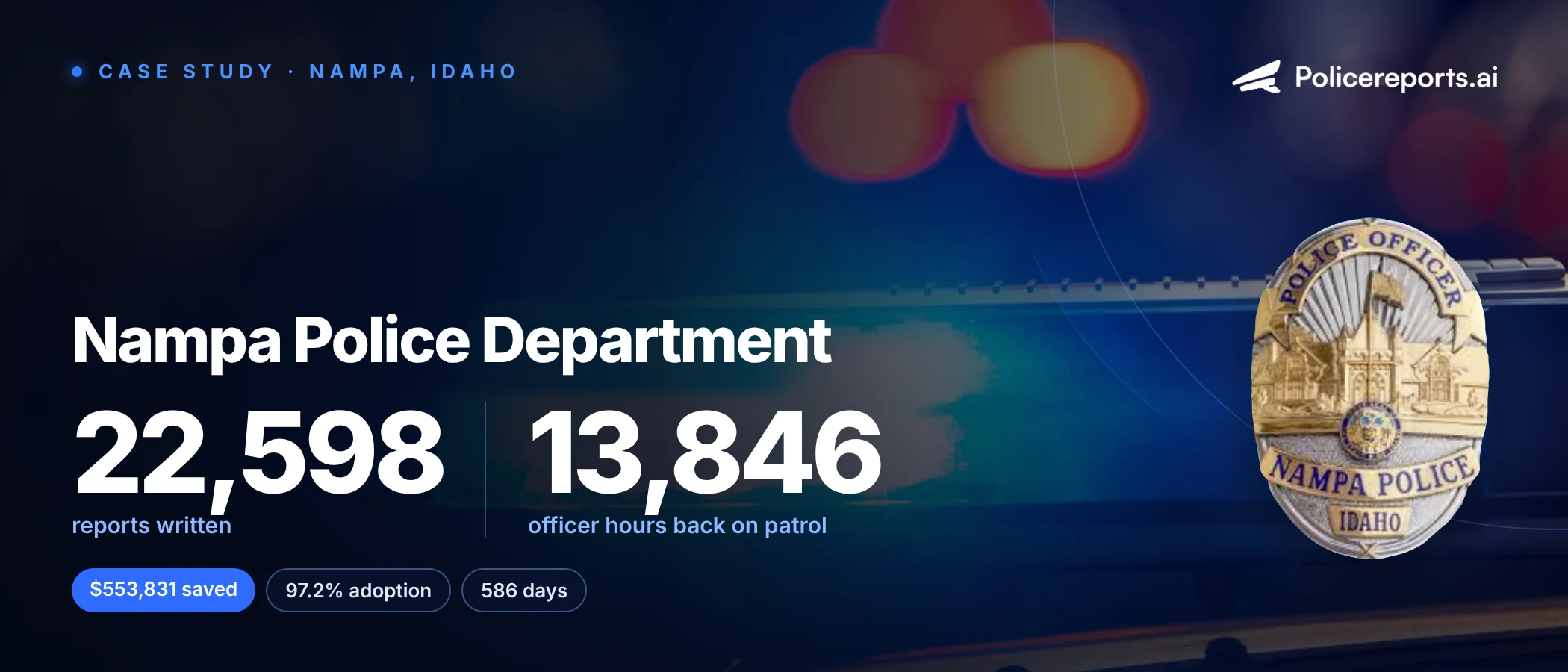
The Nampa Police Department in Idaho has used Policereports.ai for 586 days. In that time officers completed 22,598 documents on the platform and saved 13,846 hours, worth $553,831. Usage sits at 97.2%, which means AI-assisted documentation is simply how Nampa writes reports now.

The problem: a third of every shift
Before Nampa adopted Policereports.ai, report writing took roughly a third of an officer’s shift. A complex report took about two hours. That time came straight out of patrol, follow-ups and community contact, and it never showed up as a line item in any budget.
What Nampa uses it for
Nampa started with patrol narratives and kept going. Patrol narratives and supplements are the bulk of the work, and interviews and detective work make up most of the rest.
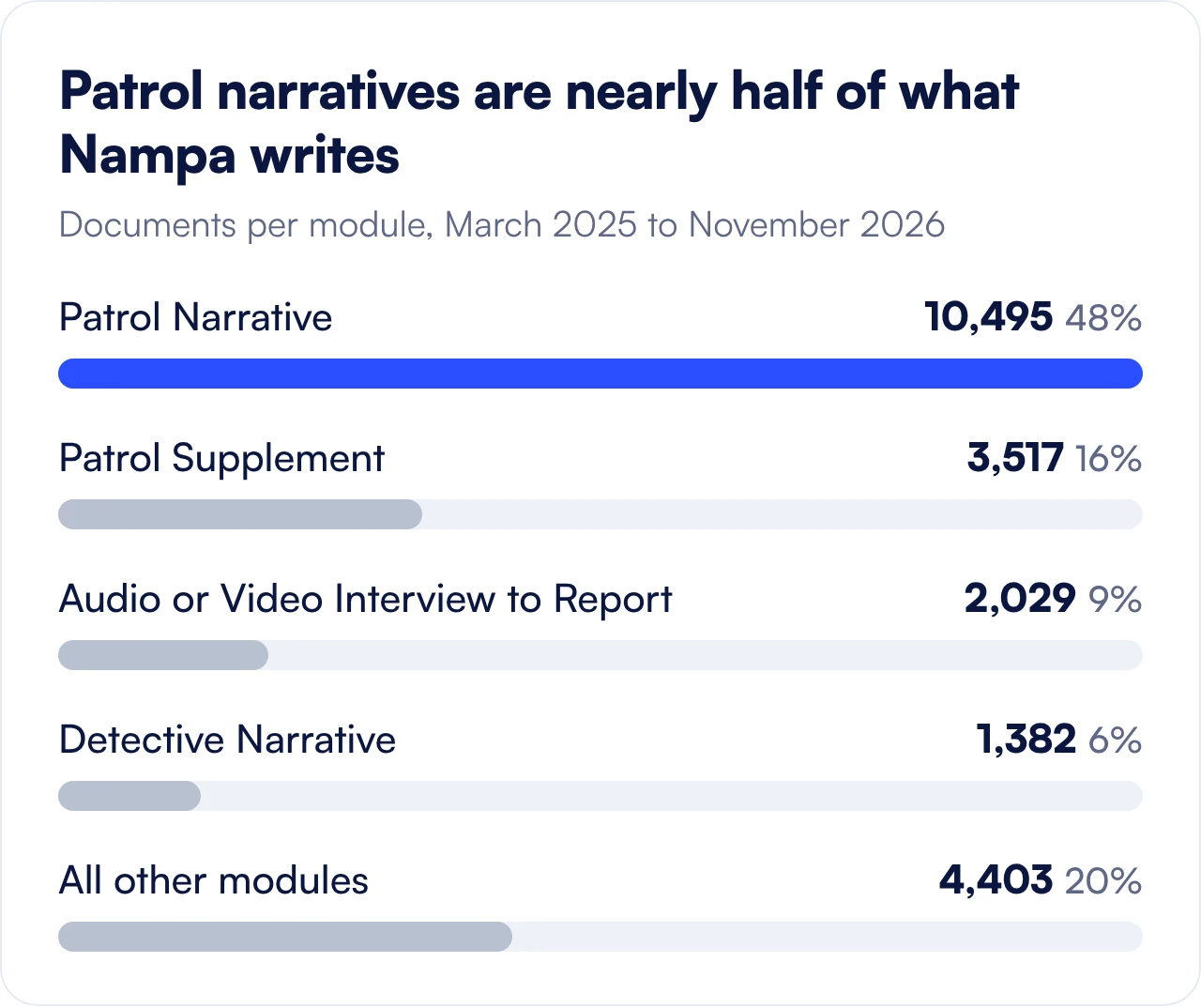
Detectives rely on it too: interviews recorded on audio or video have produced 2,029 reports, and detective narratives another 1,382.
The results
- About 37 minutes saved per document, across every module and every officer.
- 13,846 hours is 1,731 eight-hour shifts handed back to patrol.
- Annualized, that is about 8,600 hours a year, the working time of more than four full-time officers, without a single new hire.
- Volume keeps climbing: Nampa now completes 200 to 300 documents a week.
In their words
“No longer writing reports for a third of their shift.”
Lt. Jason Kimball, Nampa Police Department, on his officers, speaking to KTVB
Built to hold up in court
Nampa worked through AI-drafted reports with the prosecutor’s office before rolling out. The officer’s own dictation is the source, the output is a draft, and the officer reviews every line and signs as the author of record. Lt. Kimball walked through exactly how that works in his interview with KTVB.
See what your agency would get back
Run your own numbers in the savings calculator, or book a 20-minute demo with a former officer.
How we measure: documents, usage and hours come from the agency’s Policereports.ai usage dashboard. Savings are valued at $40 per officer hour.